Case Studies
PROJECT AT A GLANCE
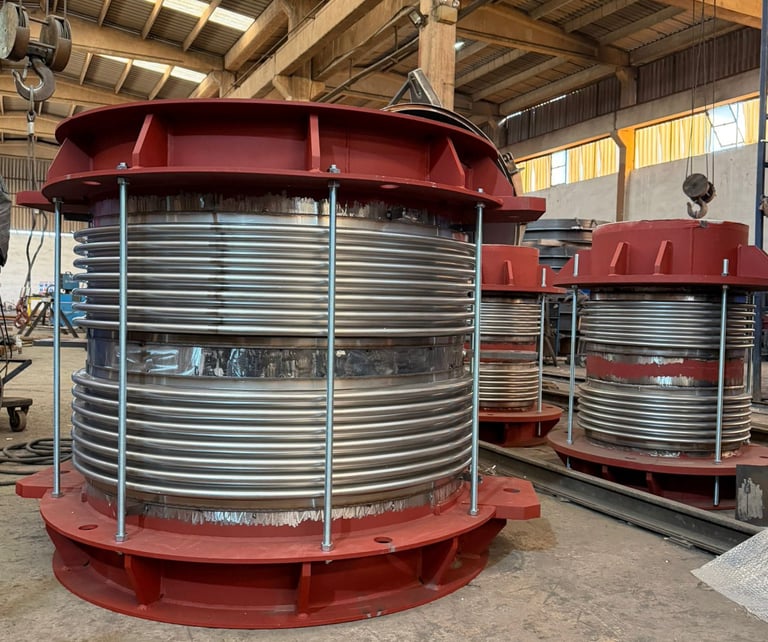
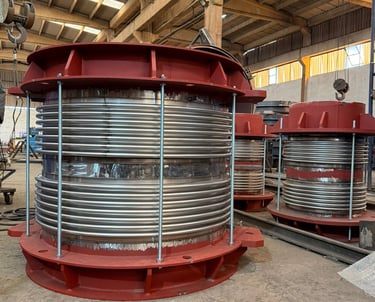
Specially Engineered Expansion Joints for a Demanding North American Project
8 Specially Engineered Expansion Joints
OD 660–1400 mm Large-Diameter Tied Lateral Design
FULL VACUUM Design & Verification Condition
4 WEEKS Engineering to Shipment
READY FOR INTERNATIONAL SHIPMENT
01 — THE CHALLENGE
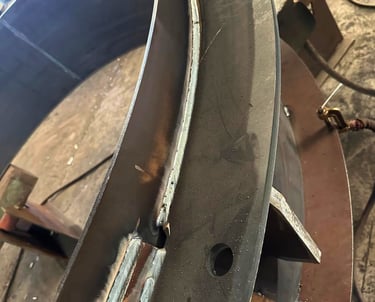
Only six months after its establishment, Flexysteel completed its first major international project, delivering a package of eight specially engineered expansion joints for a demanding application in North America.
From detailed engineering and structural verification to manufacturing, testing, coating, packing and shipment, the complete project was executed within approximately four weeks.
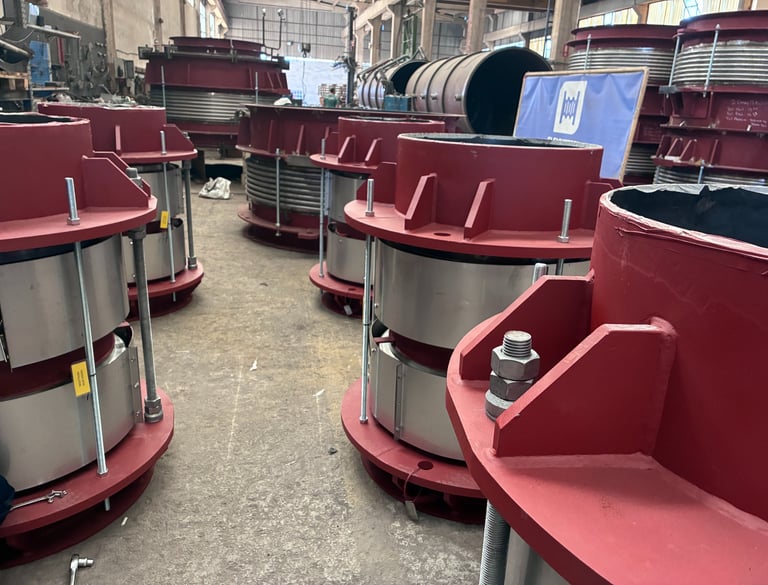
10 — FROM FLEXYSTEEL TO NORTH AMERICA
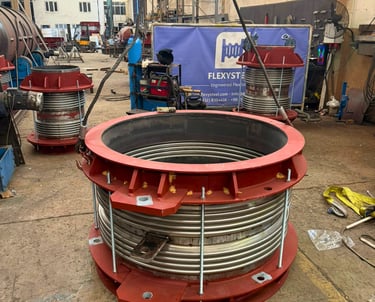
The expansion joints were required to accommodate the specified piping movements while operating under full-vacuum conditions. At the same time, minimizing the reaction forces transferred from the expansion joints into the connected piping system was a key engineering requirement.
The design therefore had two fundamental objectives: achieve the required flexibility with low spring forces, and ensure the structural integrity of the complete assembly under both operating and external piping loads.
02 — ENGINEERING THE BELLOWS
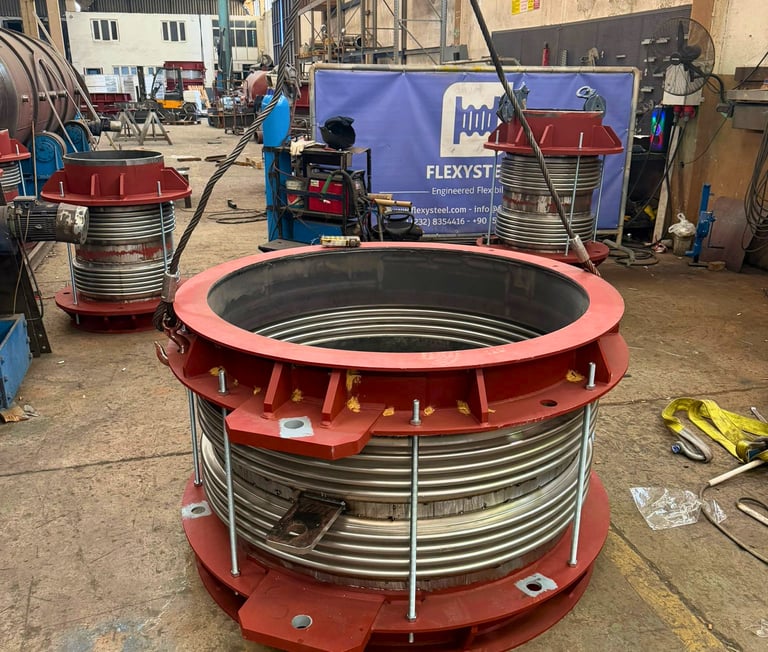
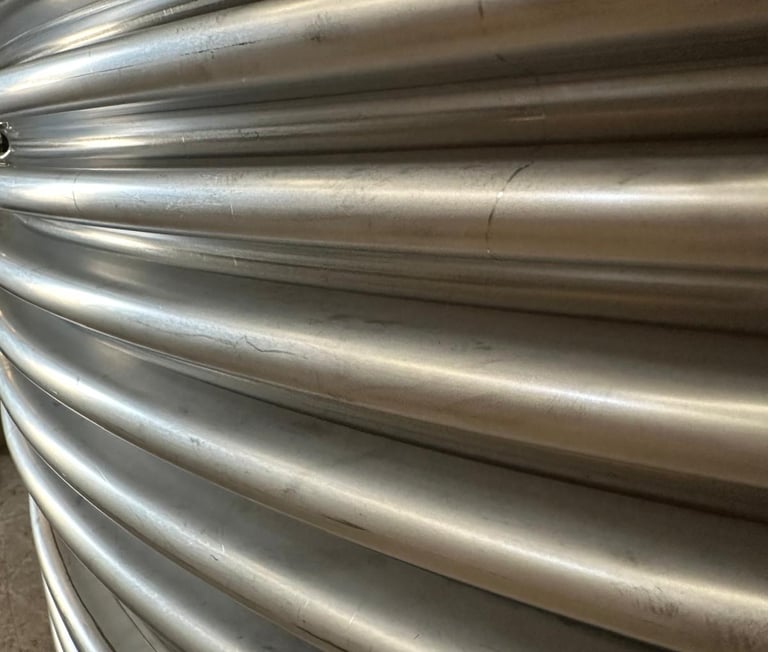
The expansion joints were required to accommodate the specified piping movements while operating under full-vacuum conditions. At the same time, minimizing the reaction forces transferred from the expansion joints into the connected piping system was a key engineering requirement.
The design therefore had two fundamental objectives: achieve the required flexibility with low spring forces, and ensure the structural integrity of the complete assembly under both operating and external piping loads.
03 — BEYOND PRESSURE THRUST
Engineering the Restraining System for Actual Piping Loads
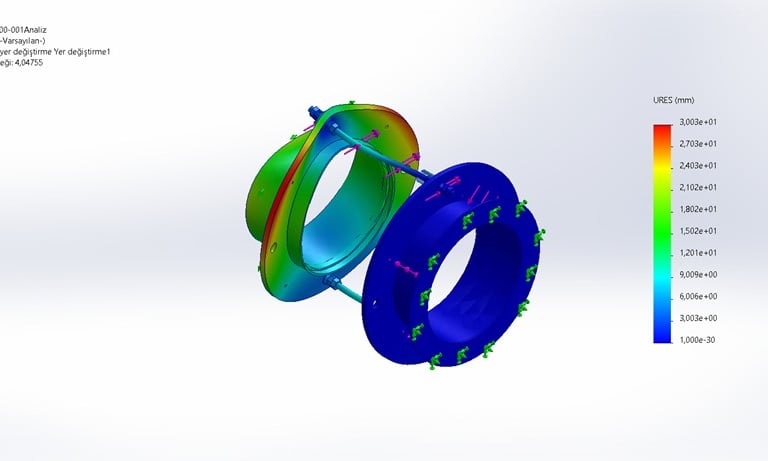
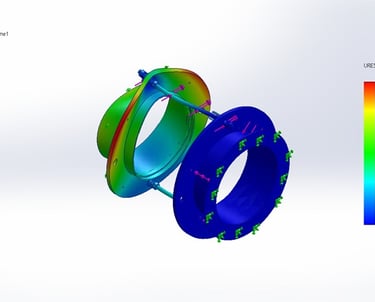
The tie rods and associated structural components were not designed solely to restrain pressure thrust. They were also required to withstand additional external loads originating from the overall piping arrangement and installation conditions.
Finite Element Analysis was used where required to evaluate stress distribution, local structural behavior and load transfer through the restraining components. The results were used to verify and optimize the final structural configuration prior to manufacturing.
Engineering principle: An expansion joint cannot be engineered in isolation from the piping system in which it operates. Its structural design must reflect the actual loads transferred through the complete assembly.
04 — ENGINEERED & MANUFACTURED TO CODE
The complete expansion joint assemblies were engineered and manufactured in accordance with the applicable requirements of EJMA for bellows design and performance evaluation; ASME Section VIII, Division 1 for applicable pressure equipment design and fabrication requirements; ASME Section IX for qualification of welding procedures and welding personnel; and ASME Section V for applicable non-destructive examination methods and procedures.
05 — FROM DESIGN TO MANUFACTURING
Controlled Manufacturing of Critical Components
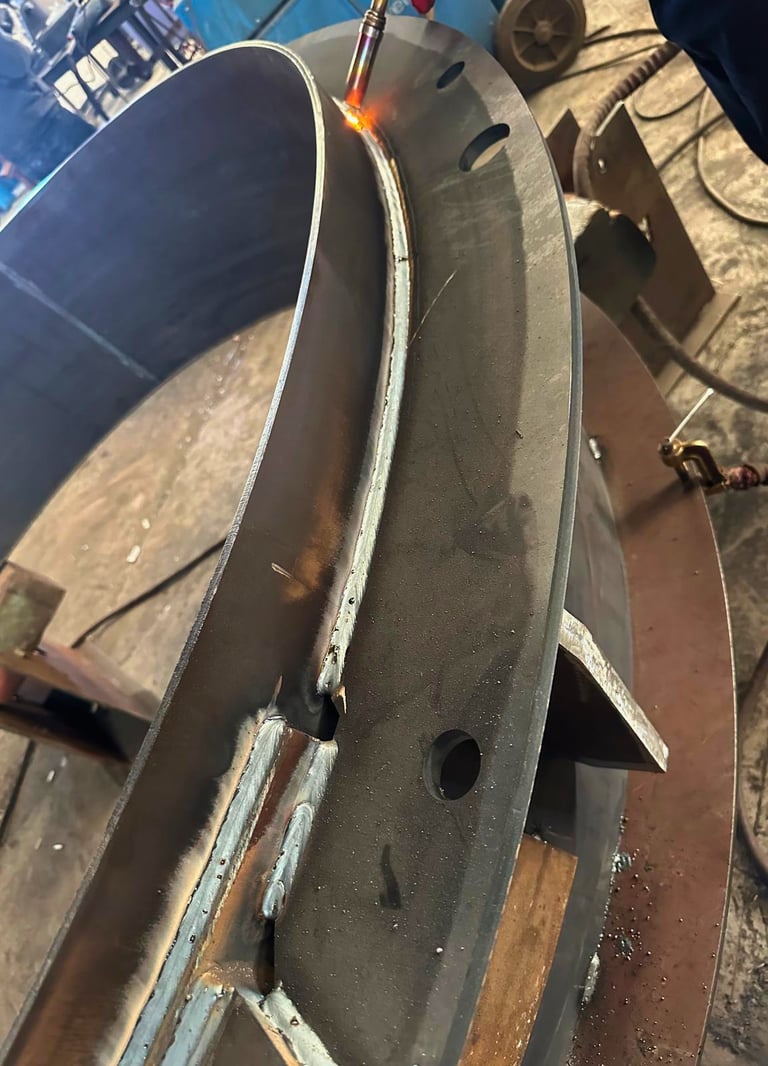
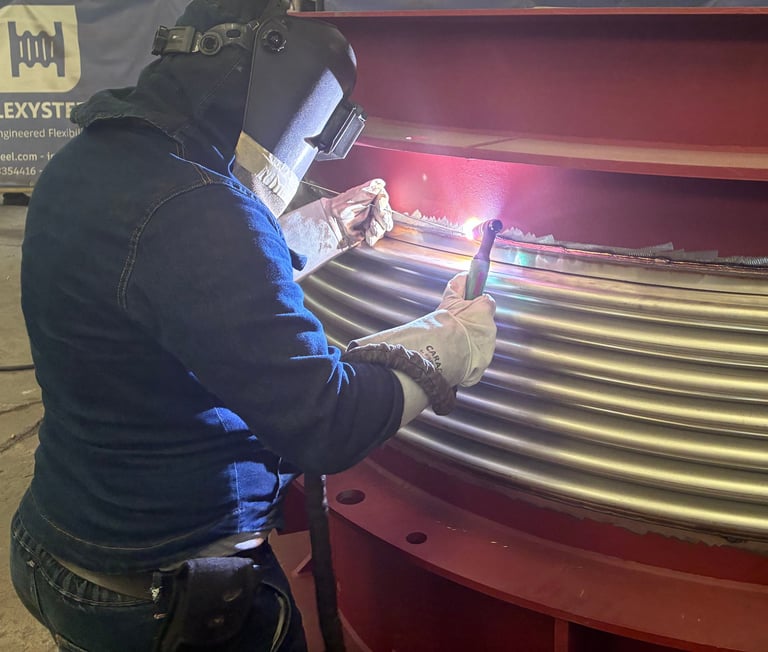
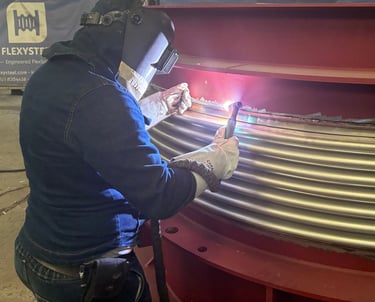
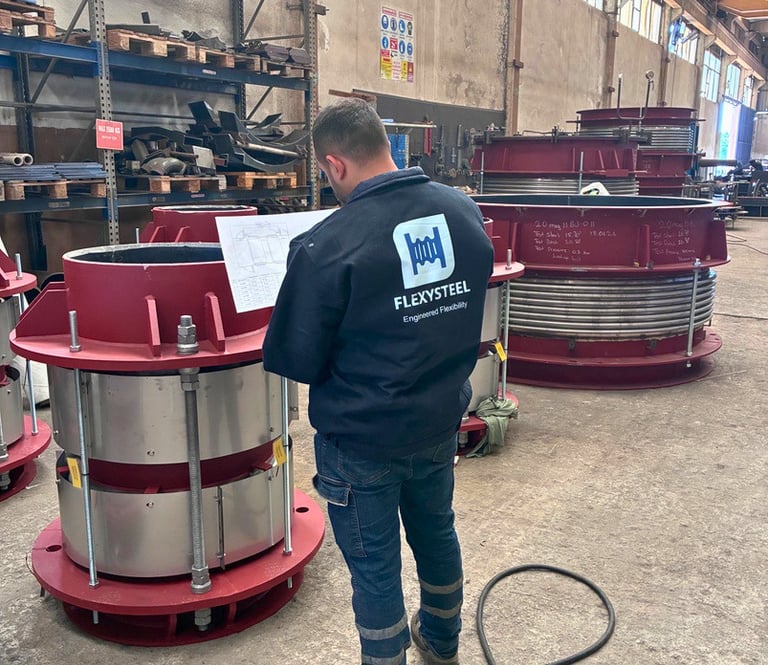
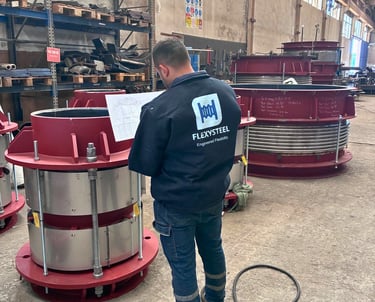
Manufacturing was carried out under controlled fabrication procedures, with particular attention given to the critical interfaces between the metallic bellows, pressure-retaining components and structural restraining system. Qualified welding procedures and personnel were used for the applicable welded joints.
06 — QUALITY BEYOND VISUAL INSPECTION
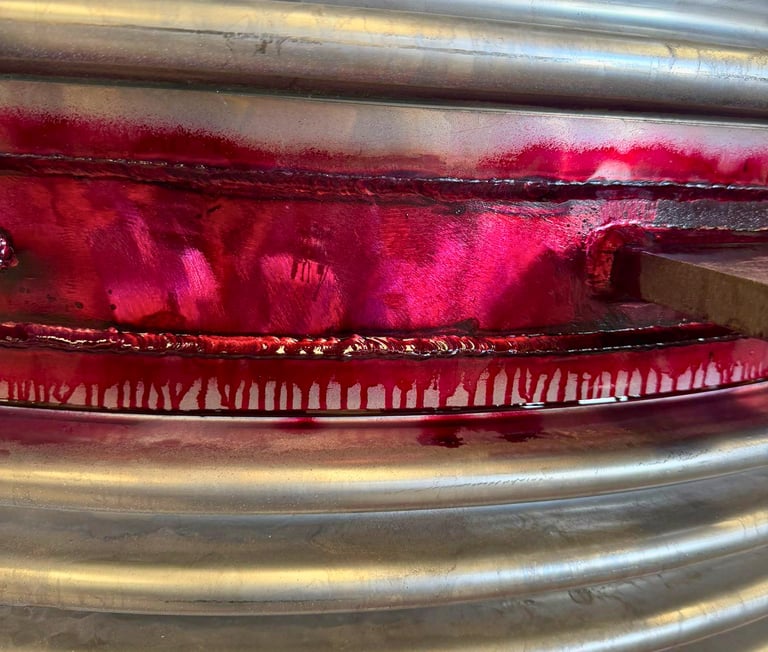
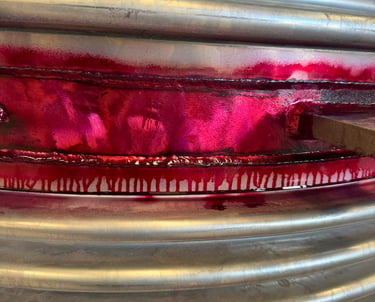
Required non-destructive examinations were performed using applicable examination methods and procedures in accordance with ASME Section V and the approved project quality requirements. Critical weld areas were examined before the assemblies proceeded to final testing.
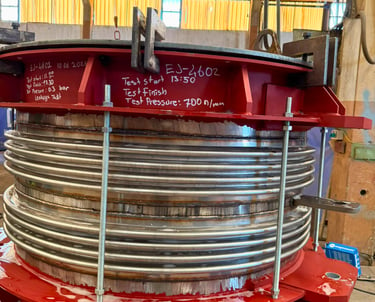
07 — VERIFIED UNDER FULL VACUUM
Testing Under Design-Relevant Conditions
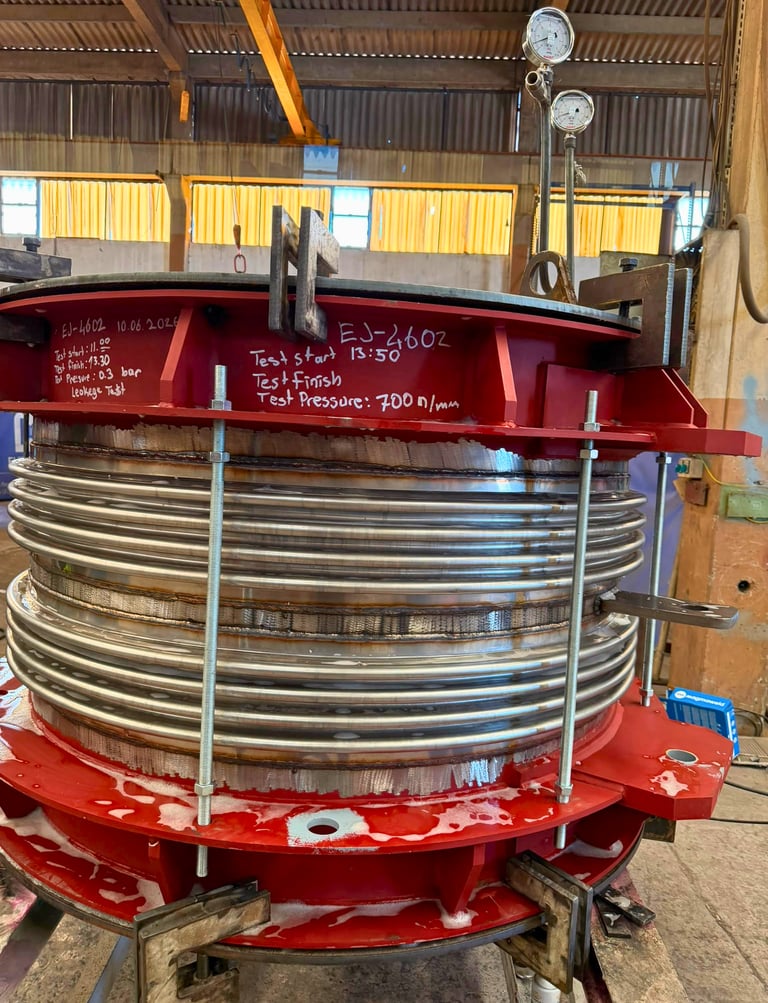
Following manufacturing and inspection, the assemblies underwent final verification before release. The testing program included full-vacuum compression testing, leak-tightness testing, dimensional verification, and final visual and quality inspection.
The testing process verified the integrity and functional behavior of the completed assemblies before coating and shipment.
08 — READY FOR DELIVERY
Final Protection for International Service
Following successful inspection and testing, the carbon-steel surfaces were protected using a coating system suitable for C3-M corrosivity conditions in accordance with ISO 12944-5. The completed units were then prepared for international transportation.
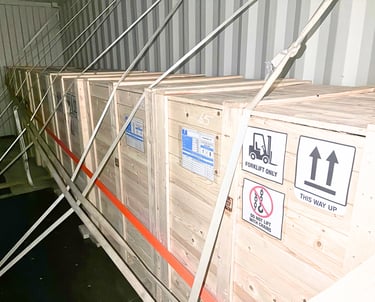
09 — SEAWORTHY PACKING
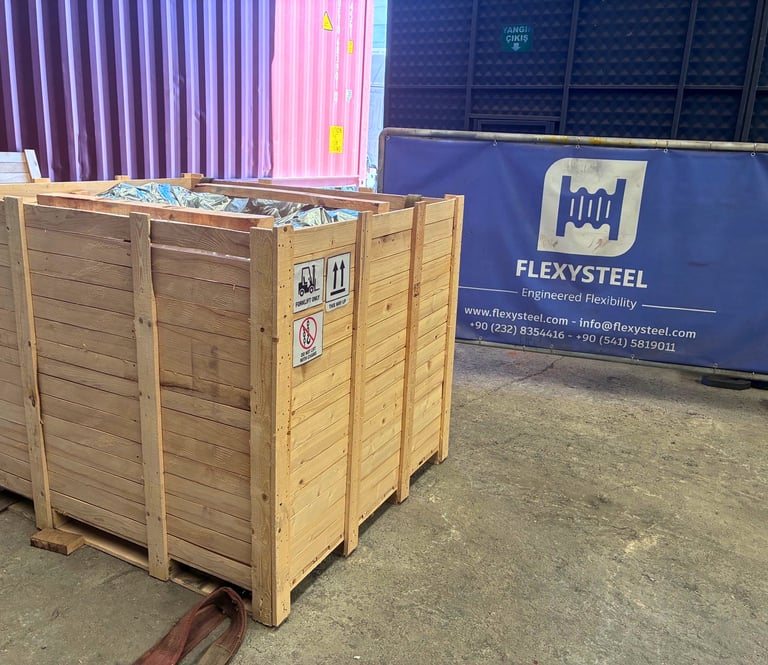
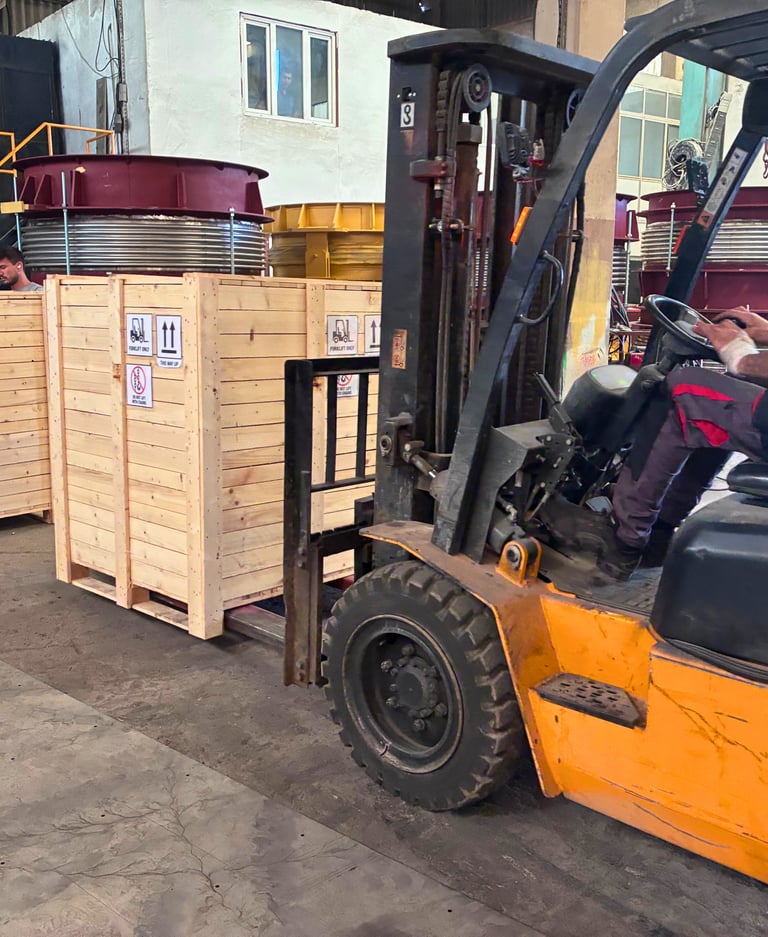
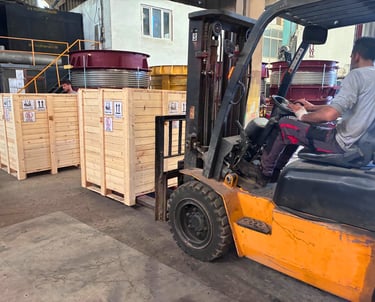
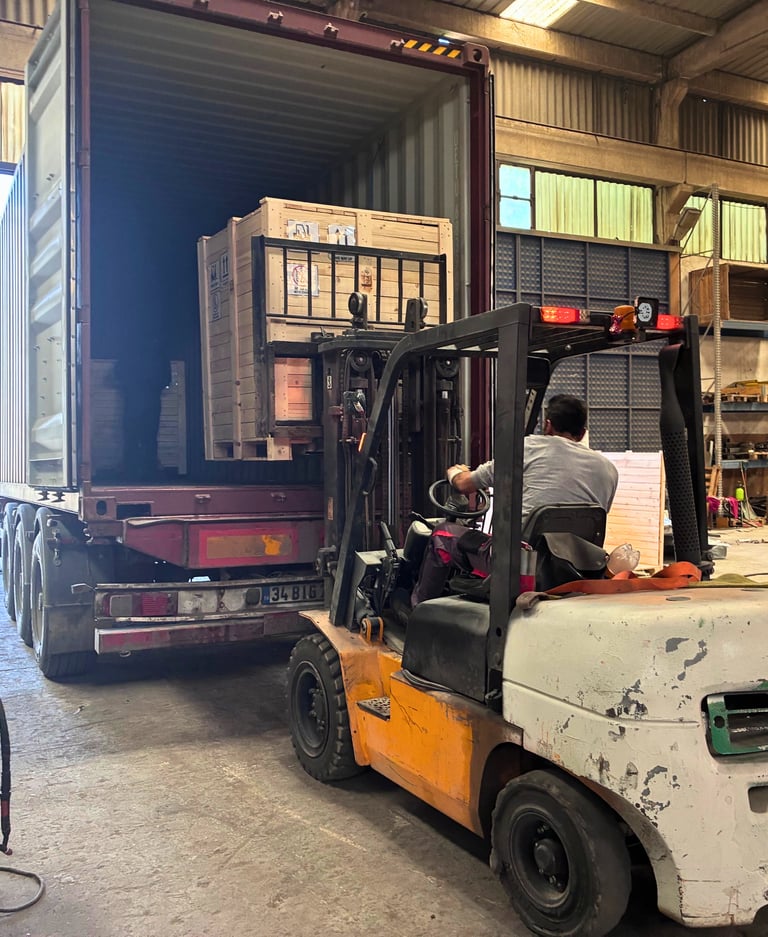
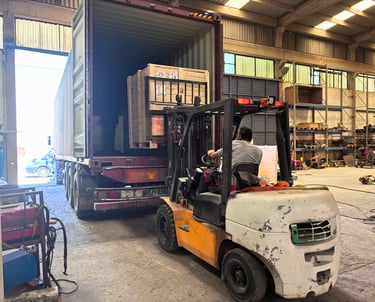
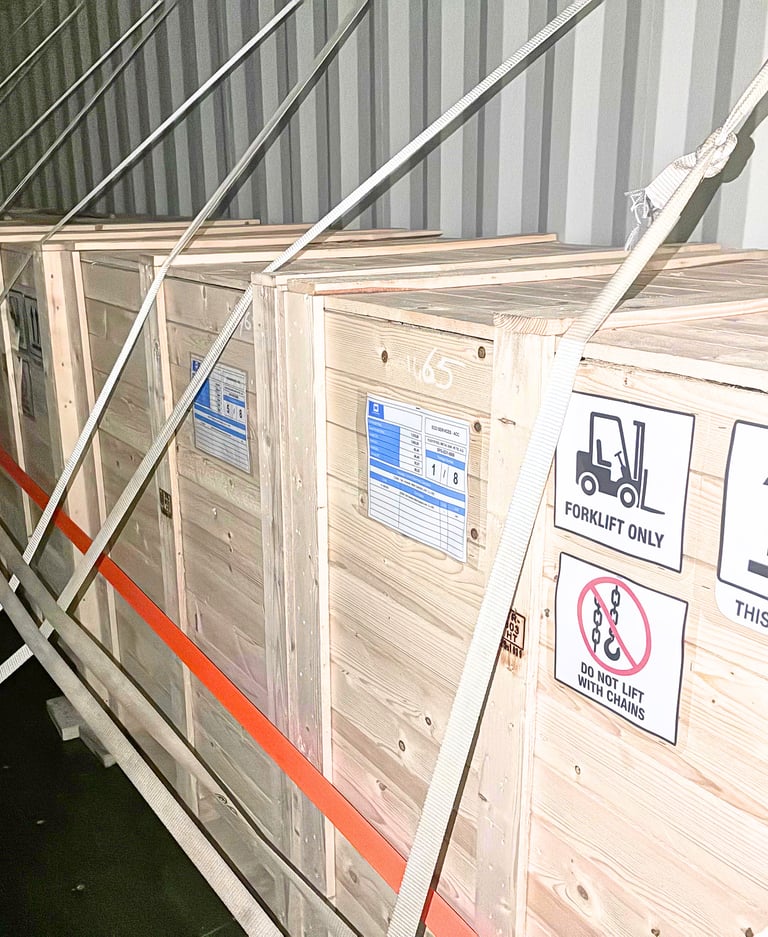
The completed expansion joints were containerized and dispatched for delivery to the installation country in North America.
PACKED
LOADED
Engineered Equipment Deserves Engineered Protection
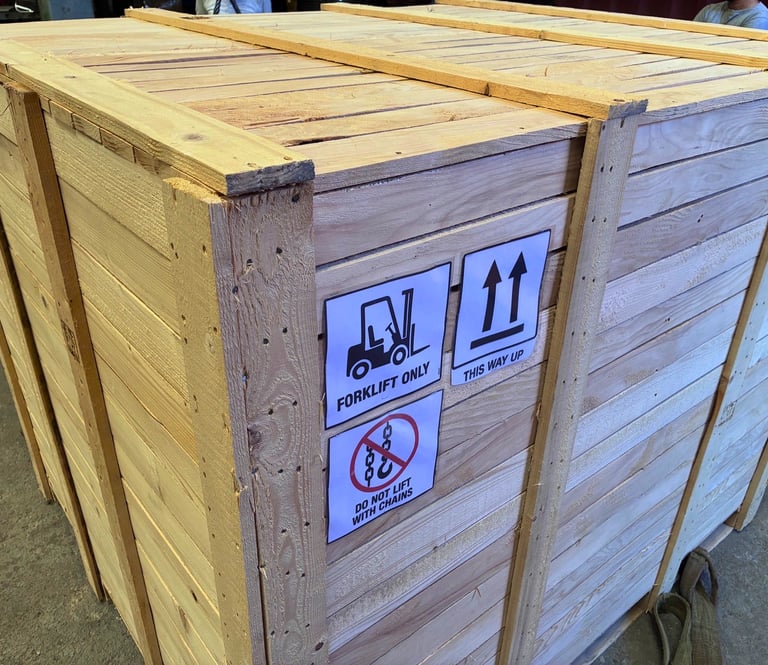
The expansion joints were prepared using seaworthy export packing suitable for international transportation. The packing arrangement incorporated appropriate securing and handling provisions together with clearly identified transportation instructions.
Get in Touch

Head Office:
Aqua Florya No:93, Kat:3, D:2
Şenlikköy Mahallesi, Yeşilköy Halkalı Cad.
Bakırköy/Istanbul
Tel: +90 (0) 541 5819011
e-mail:info@flexysteel.com
European Sales Office:
Ground Floor, 71 Lower Baggot Street
Dublin2, Co. Dublin, D02.
P593, Ireland
Tel: +353 (0) 87 1934059
e-mail: sales@flexysteel.com
UK Sales Office:
16 Saberton Close Redbourn
St.Albans AL3 7DS UK
Tel:+44 (0) 77 21665928
e-mail: uk@flexysteel.com
Manufacturing Plant:
29 Ekim Mahallesi, Karakaya Sokak
No:18, 35878 Yazıcıbaşı
35875 Torbalı/İzmir